
This post contains affiliate links.
🖤 Suunto Black Friday sale (on now): up to 46% off selected sports watches, plus exclusive gifts, per Suunto’s US store. Race 2 is $100 off ($499 to $399, or $599 to $499 in titanium). Race S is $349 to $249, and Suunto Run is $249 to $149. Vertical 2 isn’t marked down, but you can choose a complimentary vest or hoodie while supplies last. Dive computers are discounted by as much as $300. The first 150 orders get a surprise gift (a yellow merino hat, a bottle or a cap). Suunto says offer periods can differ by product, so check the price on the site before you buy.
So, what’s the best Suunto watch? For most people, it’s the Suunto Race 2. It’s the all-around training and racing watch: a bright 1.5-inch AMOLED screen, free offline maps, 115+ sport modes and up to 55 hours of battery in the most accurate GPS mode. If your weekends look more like trailheads and tent sites than race start lines, the Vertical 2 is the better fit (it adds a built-in flashlight and a longer battery). If you want those same maps and training tools in a smaller, lighter watch, get the Race S. And if you mainly run and want something feather-light, the Suunto Run is the simple pick.
Suunto is a Finnish brand that’s been making outdoor instruments for decades — compasses, dive computers and, these days, GPS sports watches. The current lineup is genuinely easier to shop than it used to be, but the names still blur together (Race 2, Race S, Vertical 2, Run, plus a few older models still on the site). This is the no-fluff rundown of the best sellers, by specs and what each one is actually for, so you can pick one and get on with your training.
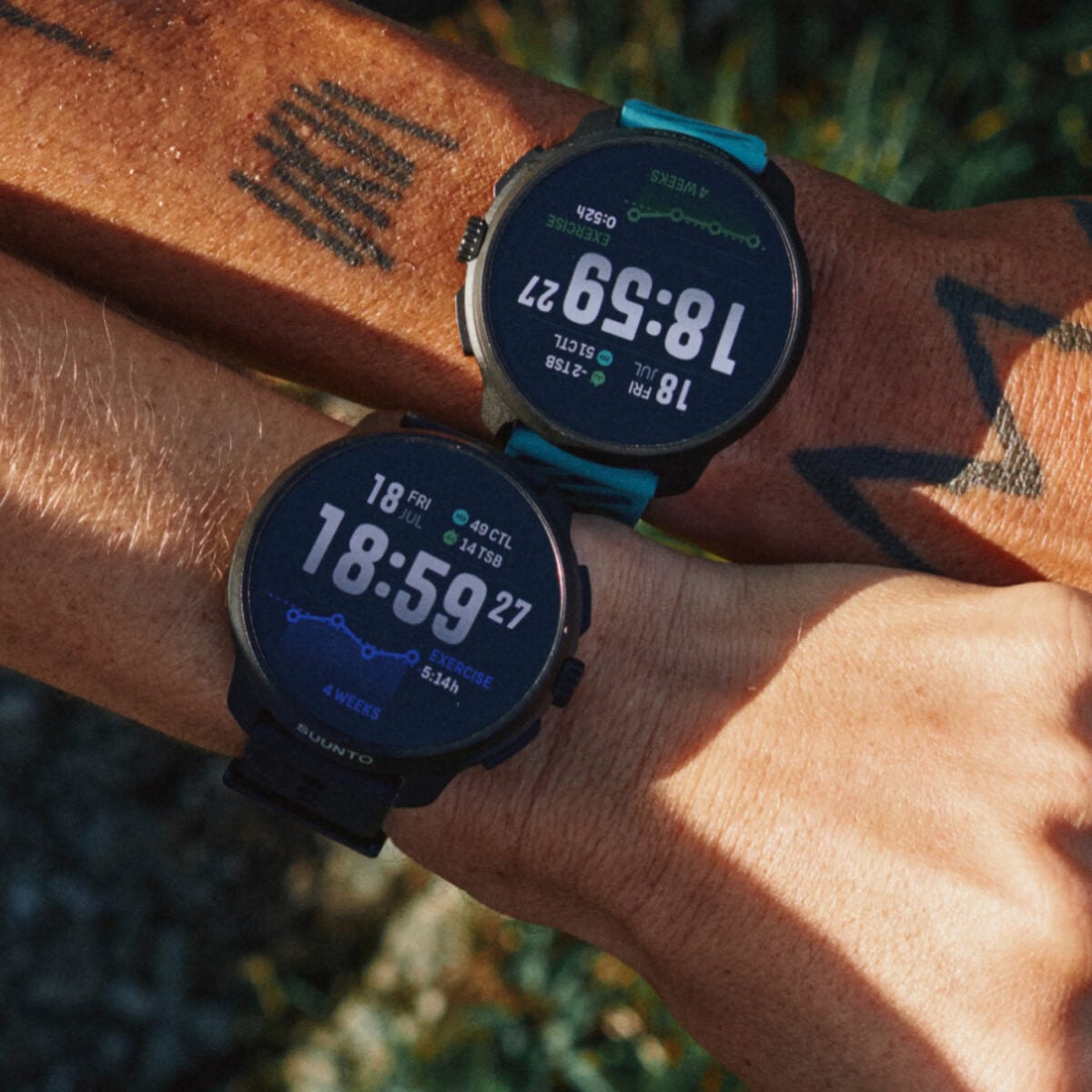
Which Suunto watch is best for you?
You don’t need to overthink this. Match the watch to the kind of days you actually have, not the fantasy week on a product page.
- Best overall (training and racing): Suunto Race 2.
- Best for hiking, backpacking and long days outside: Suunto Vertical 2.
- Best smaller, lighter watch: Suunto Race S.
- Best dedicated running watch (and the lightest): Suunto Run, at 36 grams.
- Best if you also scuba dive: Suunto Ocean (it’s a dive computer and a sports watch).
| Model | Best for | Size / weight | GPS battery* | Daily battery | Maps | Water | List price |
|---|---|---|---|---|---|---|---|
| Race 2 | Training and racing | 49 mm; 76 g steel / 65 g titanium | Up to 55 hours | Up to 18 days | 32 GB offline maps | 100 m | $499 / $599 titanium |
| Vertical 2 | Hiking and expeditions | 1.5-inch display, similar size to Race 2; Suunto lists about 87 g steel / 74 g titanium | Up to 65 hours | Up to 20 days | 32 GB offline maps | 100 m | $599 / $699 titanium |
| Race S | Smaller wrists, everyday wear | 45 mm; 60 g steel / 53 g titanium | Up to 30 hours | Up to 9 days | 32 GB offline maps | 50 m | $349 |
| Run | Running | 46 mm; 36 g | Up to 20 hours | Up to 12 days | Route navigation; 4 GB music storage | See product page | $249 |
If you’re also building a simple training habit at home, this one longer workout vs. two shorter ones breakdown is a helpful place to start — the watch just tracks the work. You still have to do it.
Suunto Race 2: the all-around training and racing pick
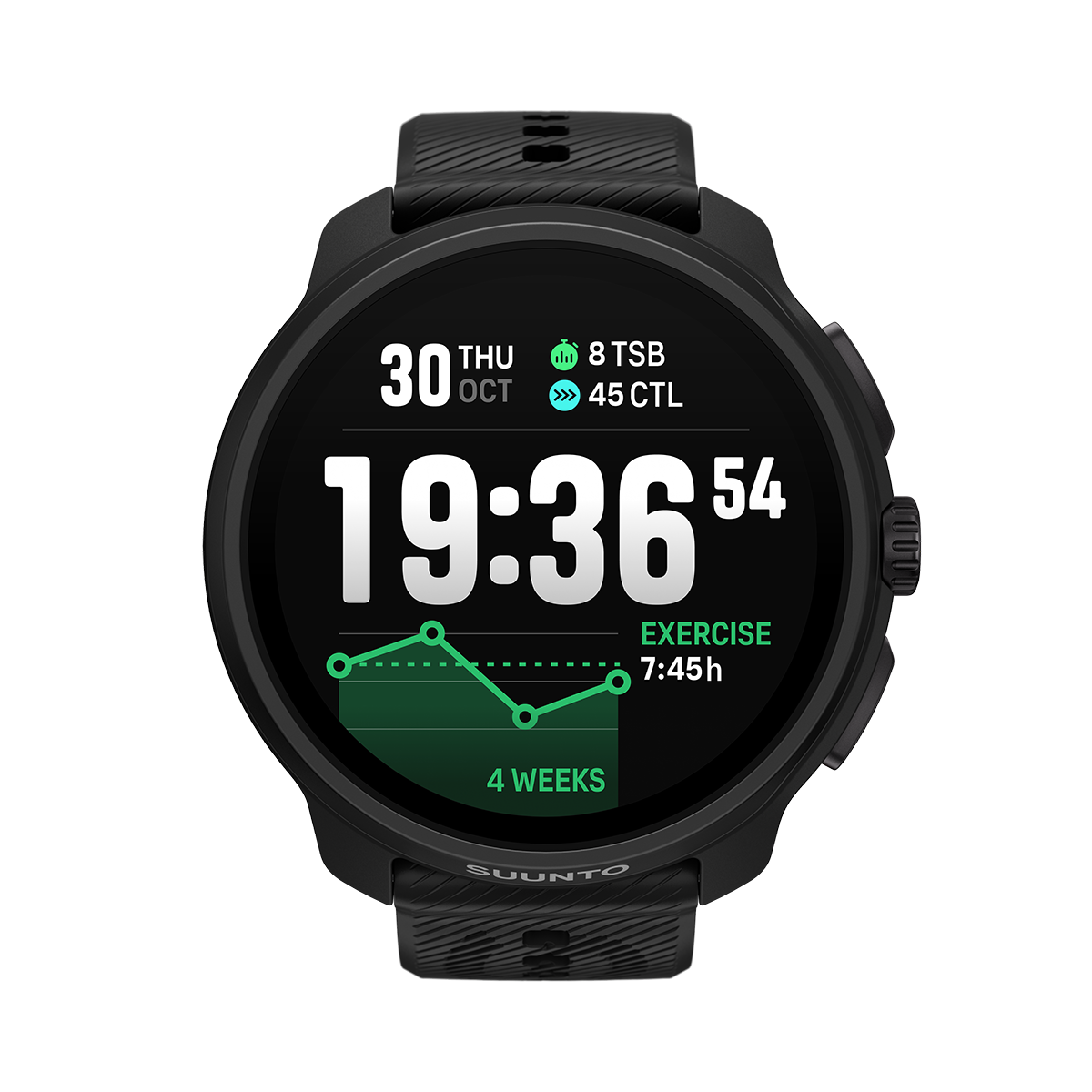
If you only remember one model, make it Race 2. Suunto calls it the “ultimate performance watch for racing and training,” and the specs back that up for most people who run, ride, lift and occasionally get on a trail.
The screen is a 1.5-inch LTPO AMOLED display (466 × 466) under sapphire crystal, which is the scratch-resistant glass you want if a watch is going to live on your wrist at the playground, on a trail and in the kitchen sink. The steel model is 49 × 49 × 12.5 mm and 76 grams; titanium drops that to 65 grams. Both are rated to 100 meters of water resistance. You get 115+ sport modes, free offline maps with 32 GB of storage, dual-band GPS, and training tools like Suunto Coach, Race Pacer and ZoneSense.
Battery life is the other reason this one keeps coming up as the best Suunto watch overall. Suunto rates it at up to 55 hours in Performance mode with multi-band GPS, up to 65 hours in single-band GPS, up to 200 hours in Tour mode (lower GPS accuracy, heart rate off), and up to 18 days of daily smartwatch use (or 30 days with daily heart rate off). That’s “forget your charger on a long weekend” territory for most of us, and enough for a long ultra if that’s your thing.
List price is $499 for the steel models and $599 for titanium. Colors on the US store include All Black, Coral Orange, Feather Gray, Wave Blue, Titanium Black and Titanium Trail.
Suunto Race 2 vs Vertical 2: which one should you buy?
This is the comparison people search most, and it really does come down to how you spend your long days. On paper, Race 2 and Vertical 2 look like siblings: same 1.5-inch AMOLED family, same free offline maps, same dual-band GPS, same 115+ sport modes, same 100-meter water rating.
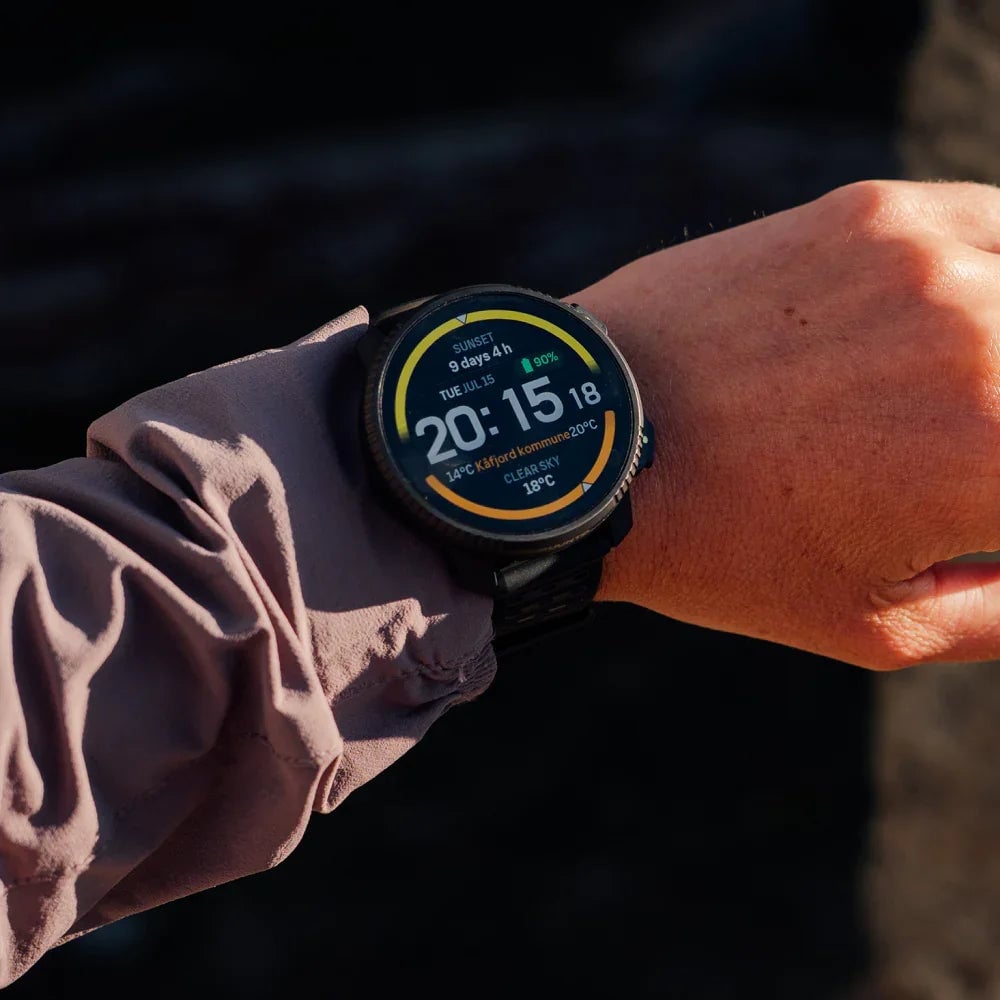
Vertical 2 is the adventure watch. Suunto designed it for “adventurers who demand the best when testing their limits — far from the trailhead and cell service.” The two upgrades that actually change the decision are the built-in LED flashlight and the longer battery: up to 65 hours in the most accurate GPS mode, up to 250 hours in Tour mode, and up to 20 days of daily use. That’s the watch you want if you’re out before sunrise, finishing a hike after dark, or sleeping in a tent and you’d rather not babysit a charger.
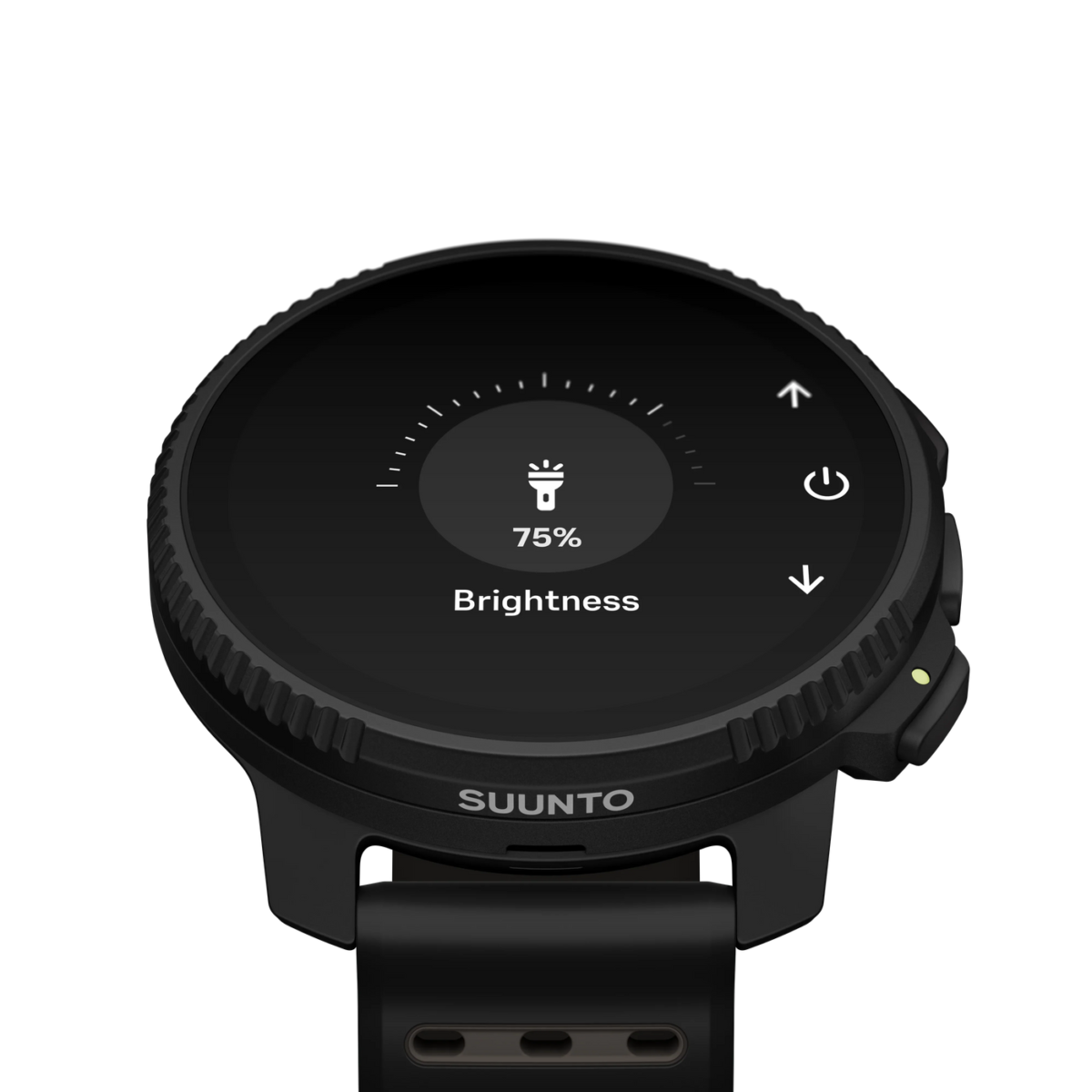
Suunto lists Vertical 2 at $599 for steel and $699 for titanium (All Black, Arctic Gray, Canyon and Pine Green in steel; Titanium Black and Titanium Sage in titanium). If your calendar is races, speed work and weekend long runs, Race 2 is enough — and it costs less. If your calendar is ridges, early trailheads and the occasional night finish, spend the extra on Vertical 2.
Packing for a real overnight? A solid little pan matters as much as a solid watch. Here’s a practical backpacking fry pan guide if you’re building out a simple kit.
Suunto Race S: the smaller, lighter option
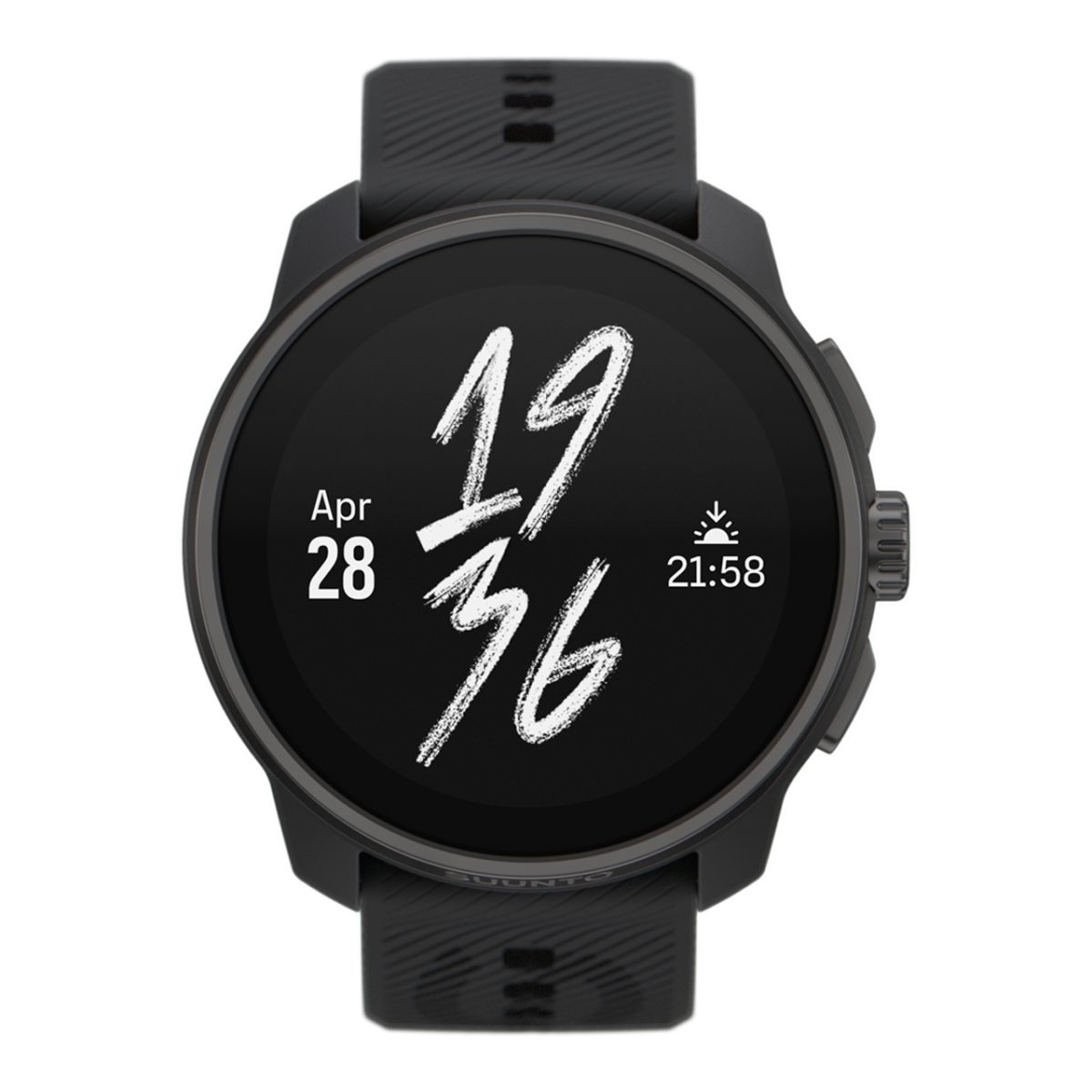
Race S is, in Suunto’s words, “the performance watch, just smaller.” That’s the honest pitch. In Suunto’s own Race S vs Race 2 comparison, the software is the same: free offline maps with 32 GB of storage, 115+ sport modes, dual-band GPS, Suunto Coach, race tools, heart rate, sleep and HRV tracking. You’re choosing hardware, not features.
The case is 45 × 45 × 11.4 mm. The steel model is 60 grams; titanium is 53 grams. The display is a 1.32-inch AMOLED (still 466 × 466) under Gorilla Glass, and water resistance is 50 meters — enough for pool and open-water swimming, per Suunto, but not the 100-meter rating you get on Race 2. Battery is the other trade-off: up to 30 hours in the most accurate GPS mode, up to 120 hours in Tour mode, and up to 9 days of daily use (13 days with daily heart rate off). If your longest efforts finish under 30 hours of GPS time, that’s plenty.
List price is $349 for the standard models (including the UTMB World Series edition). Titanium versions list higher, around $449. This is the one I’d point a smaller wrist toward, or anyone who finds a 49 mm watch bulky for all-day wear — including sleep tracking.
What’s the best Suunto watch for running?
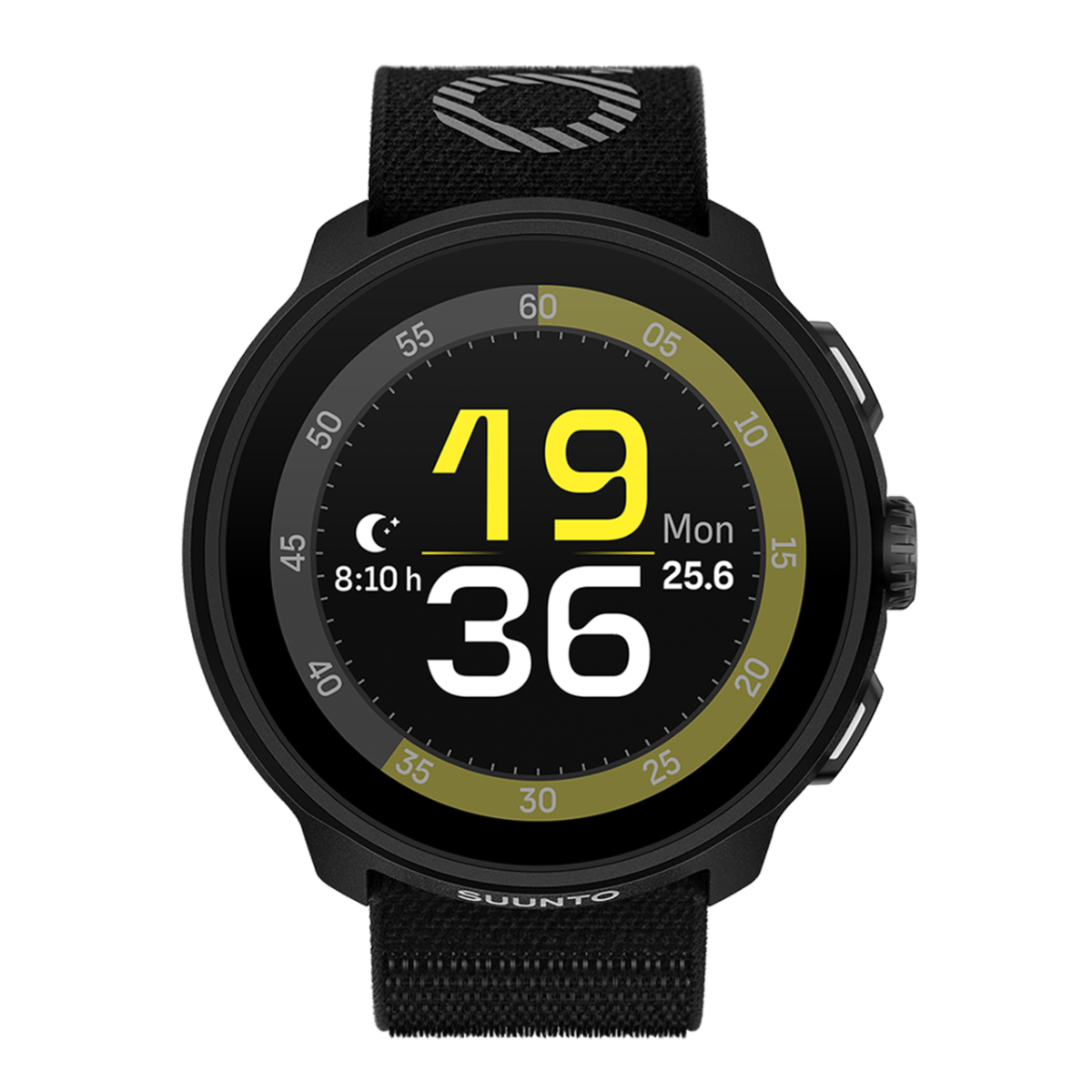
If you mostly run — road, trail, treadmill — and you want a watch that disappears on your wrist, start with Suunto Run. Suunto rates it at 36 grams, which it calls its lightest watch, with a 46 × 46 × 11.5 mm case and a textile strap. The screen is a high-definition AMOLED, and you get a crown button for quick browsing, dual-band GPS, 34 sport modes, structured workouts, training-load tracking and route navigation from your wrist.
Battery life is up to 12 days of daily use (with activity and sleep tracking) and up to 20 hours of training in the most accurate dual-band GPS mode, or up to 40 hours in power-saving mode. It also has Bluetooth audio controls and 4 GB of MP3 storage, so you can leave your phone behind on a familiar loop. List price is $249.
Is it the “best Suunto watch for running” in every case? If you want the bigger maps, longer battery and 115+ sport modes, Race 2 or Race S is the more complete training watch. Run is the one you buy when you want light, simple and runner-first — and you don’t need a full expedition computer on your arm.
A couple of things that help the runs themselves: staying hydrated (a big marked bottle like this AQUAFIT 1-gallon water bottle makes that easier) and, if you’re lifting or trying to hold onto muscle, the basics on why so many people are taking creatine. The watch logs the session. The rest of the routine still counts.
Other Suunto models worth knowing
The four above cover almost everyone. A few others are still worth a mention so you don’t get lost on the product page.
Suunto Race 3S is the newest watch in the Race family on the US store, listed at $599 in titanium (colors include Titanium Black, Feather and Orchid). It’s priced with the Race 2 titanium, and it’s the one Suunto is pairing with its newer Suunto AI Coach features. If you’re set on the latest model, check that product page for the current bundle details. For most buyers, Race 2 is still the clearer “best overall” pick right now, just because the specs and the comparisons around it are so settled.
Suunto 9 Peak Pro is the thinner older flagship (Suunto lists the body at 10.8 mm) with a sapphire touchscreen, 95+ sport modes and up to 40 hours of battery in its best GPS mode. The All Black lists at $249, so it can make sense if you want a slimmer watch and you find a good price. I’d still start with Race S or Race 2 if you want the current maps and battery story.
Suunto Core 2 is a different kind of watch: a classic ABC outdoor watch (altimeter, barometer, compass), not a full GPS training computer. Suunto rates the battery at up to 15 months, with a storm alarm and a switchable red/green backlight. It lists at $199. Buy this if you want a tough watch-for-the-woods, not a running coach.
Suunto Ocean is the one to look at if you scuba dive and you want a sports watch. It’s a dive computer (air and nitrox, with more advanced gas options on the dive side) that also does outdoor sports, offline maps and daily tracking. List price is $899. Dedicated dive computers like the D5 and EON Core are on the same store if diving is the whole point.
What about Suunto Wing headphones?
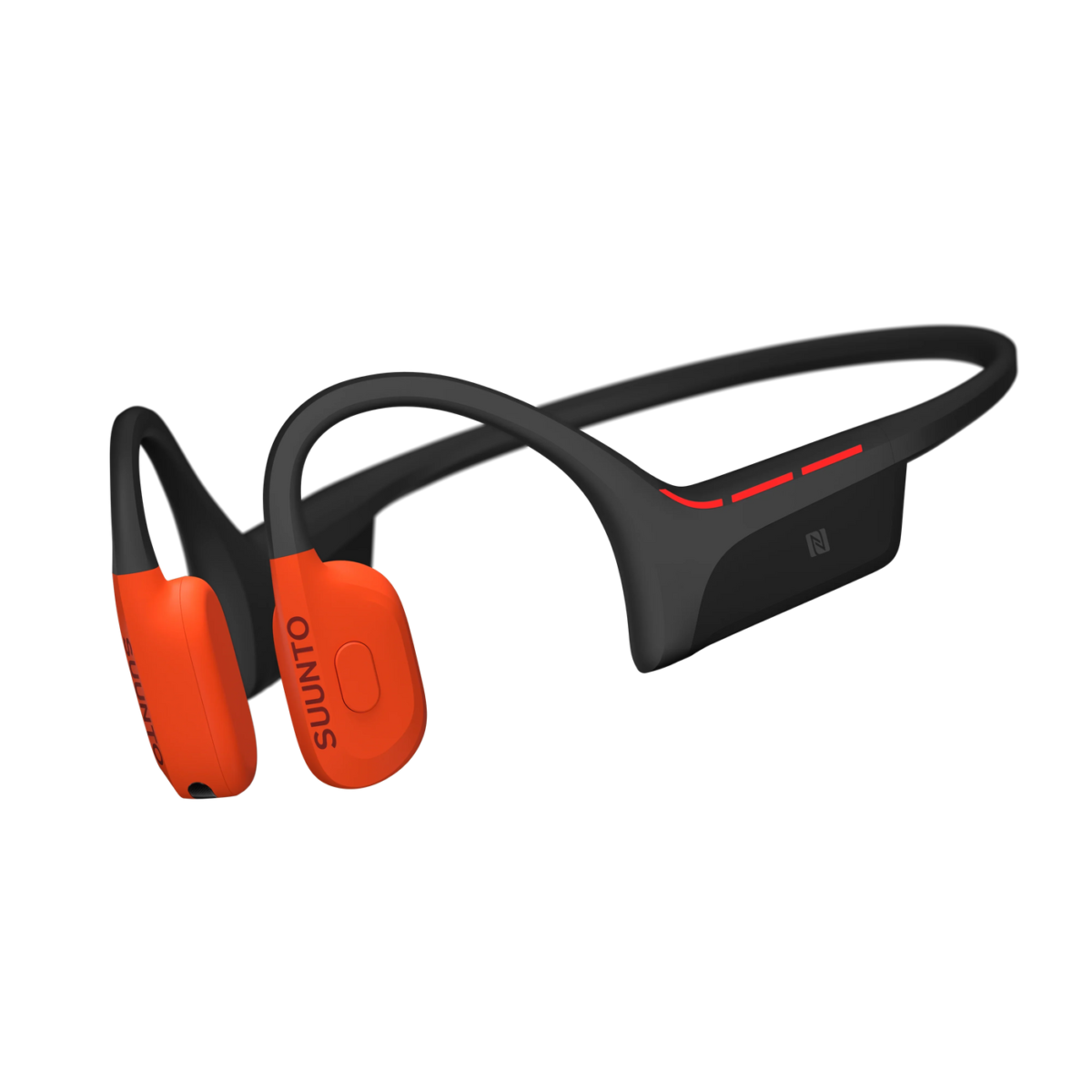
Suunto also makes open-ear bone-conduction headphones, which sit on your cheekbones so your ears stay open to traffic, trails and kids yelling from the next room. The current model is Wing 2: Suunto lists an open-ear design, head-movement controls, IP66 sweat and water resistance, an LED light, up to 12 hours of battery plus 24 hours with the power bank, and real-time feedback from a paired Suunto watch. It lists at $179. The original Wing is still on the site at $169 (IP67, up to 10 hours plus 20 hours with the power bank).
They’re a nice add-on if you already like the brand, not a substitute for picking the right watch first.
Is Suunto a good watch brand?
Yes — especially if you want long battery life, real offline maps and a price that usually comes in under a comparable Garmin. Suunto’s newer Race and Vertical watches also have the kind of bright AMOLED screens people used to switch brands to get. The Suunto app is where you plan routes, see training load and updates, and it connects with familiar training tools like Strava and TrainingPeaks.
A fair caveat, and this is true of most GPS sports watches: wrist-based heart rate is convenient, but a chest strap is still the more reliable option if you train closely by heart rate. Suunto watches pair with Bluetooth and ANT+ straps, and a simple strap is a cheap add-on. I’m not going to pretend I’ve lab-tested every model — I’m going off Suunto’s published specs and the way these watches are positioned. If a certain sensor or map quirk matters a lot to you, read a recent in-depth test of that exact model before you buy.
Suunto vs. Garmin (or Coros) is a personal-taste question more than a “one is better” question. Garmin still has the bigger app ecosystem and more niche features. Suunto tends to feel simpler, with maps included instead of sitting behind a subscription, and the watches often cost less at the same battery-and-screen level. If you already live in Garmin Connect and love it, you may not want to move. If you want a strong outdoor watch without paying flagship-Garmin money, Suunto is absolutely in the conversation.
How much does a Suunto watch cost?
On Suunto’s US store, current list prices for the models in this guide are: Suunto Run $249, Race S $349, Race 2 $499 (titanium $599), Vertical 2 $599 (titanium $699), Race 3S $599, 9 Peak Pro All Black $249, Core 2 $199, Ocean $899, and Wing 2 headphones $179. Those are regular prices, not sale prices. Suunto also sells some selected products as HSA/FSA eligible through Truemed; eligibility isn’t guaranteed and depends on an assessment, so read the terms if that’s part of your plan.
I don’t have a standalone Suunto discount code to share. When Suunto is running a sale, the discounted price shows on the product page. Use the button in this post and confirm the number you see at checkout.
Can you return a Suunto watch?
Suunto’s US store lists 30-day hassle-free returns, and the site also mentions a global warranty repair program. If a free gift was included with a promotional order, Suunto’s Black Friday terms say you should contact customer support for instructions on sending the gift back too. As always, skim the current returns policy before you hit buy, in case anything has changed.
One last thought, mom to mom. Getting outside and taking care of the body you’ve been given is one of the kindest things you can do for the people who need you — and for you. A good watch won’t log the miles for you, but it can make it a little easier to lace up, find the trail and come home with a story.
Suunto watch FAQ
For most people, Suunto Race 2 is the best all-around pick. It has a 1.5-inch AMOLED display, free offline maps, 115+ sport modes and up to 55 hours of battery in its most accurate GPS mode. Pick Vertical 2 if you want a built-in flashlight and longer battery for hiking, Race S if you want the same maps and training tools in a smaller, lighter watch, or Suunto Run if you mainly run and want something very light.
They share a 1.5-inch AMOLED display, free offline maps, dual-band GPS and 115+ sport modes. Vertical 2 adds a built-in LED flashlight and a longer battery (up to 65 hours in the most accurate GPS mode and up to 20 days of daily use, versus 55 hours and 18 days on Race 2). Race 2 is the training-and-racing watch; Vertical 2 is the expedition and hiking watch. Race 2 lists at $499 (steel) or $599 (titanium). Vertical 2 lists at $599 or $699.
Yes. Suunto Race 2 includes free offline maps with 32 GB of storage, dual-band GPS, route planning in the Suunto app, Climb Guidance and heatmaps. Race S and Vertical 2 have the same 32 GB offline-map storage.
I don’t have a special promo code to share, and the affiliate link in this post doesn’t add one. Suunto runs its own sales on us.suunto.com (including seasonal promotions), and prices can vary by model. Check the current price on the site through the link in this post before you buy.
Suunto Race 2 and Vertical 2 are rated to 100 meters of water resistance and include swimming sport modes. Suunto says Race 2 can also be used for snorkeling or mermaiding down to 10 meters, but it is not a scuba dive computer. Race S is rated to 50 meters, which Suunto says is enough for pool and open-water swimming. If you actually scuba dive, look at Suunto Ocean or another Suunto dive computer instead.
Suunto’s US store lists 30-day hassle-free returns. The Black Friday terms say the standard return policy still applies, and if a complimentary gift came with your order you should contact customer support about sending that back too. Always check the current returns page at checkout, because policies can change.
More posts you might like
- 1 Hour Workout vs 2 30-Minute Workouts
- Why Is Everyone Taking Creatine?
- Best Tasting Chocolate Whey Protein Powder
- Clean Simple Eats Protein Bites
- AQUAFIT 1 Gallon Water Bottle
- Best Backpacking Fry Pan
- Best eBike for an RV
Ready to pick one? Shop Suunto watches here and start with the model that matches the way you actually train.

Hi, my name is Melissa! I live in Spanish Fork, Utah. I’m happily married to Rob, and together we have five wonderful kids. Our family loves to embark on adventures, often in our RV, exploring the great outdoors. I’m an avid reader and a big fan of Hallmark movies – they always have a way of lifting my spirits. Hiking is another passion of mine; there’s nothing like the tranquility of nature. I have a sweet tooth for chocolate and a love for Mexican food, both of which make life a little more delicious. In my downtime, I enjoy playing games with my family, creating memories and sharing laughter. Life is an adventure, and I’m here to enjoy every moment of it! I’m the blogger and creative mind behind the blog A Sparkle of Genius! Check out our posts on recipes, crafts, kid stuff, printables, travel and more!
