
This post contains affiliate links.
The fridge is packed, the dishes are (mostly) done, and now everyone wants a second Thanksgiving plate. Here is the short version: most Thanksgiving leftovers keep 3 to 4 days in the fridge, so if you cooked on Thursday, plan to eat or freeze them by the Monday after Thanksgiving (USDA FSIS). When you warm them up, every dish should reach 165°F on a food thermometer, and gravy should come to a rolling boil (USDA FSIS).
Below is a one-glance chart for every dish on the table, the best way to reheat each one so it still tastes like Thursday, and quick fixes for dry turkey, gluey potatoes and soggy stuffing.
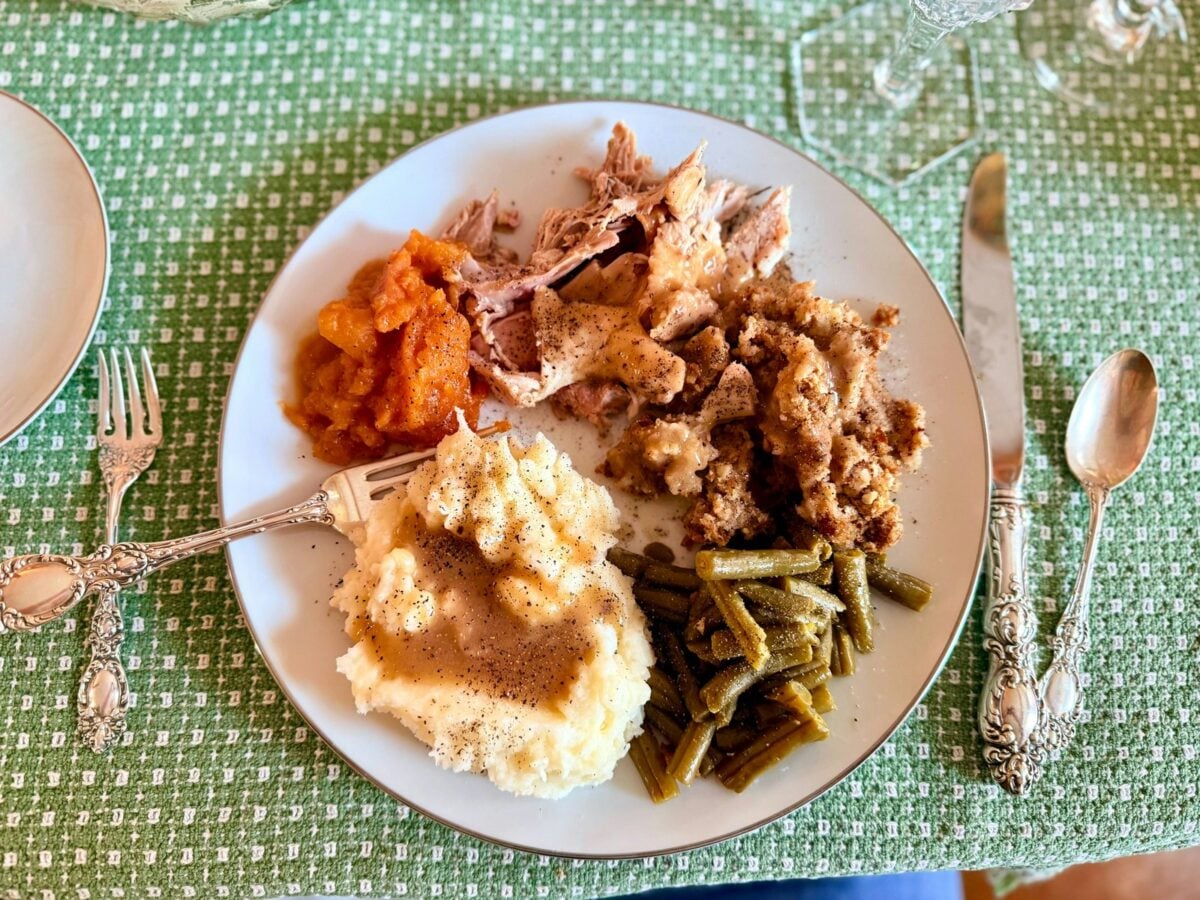
Thanksgiving leftovers chart: how long they last and how to reheat them
Fridge times assume your refrigerator is at 40°F or colder and the food went in within 2 hours of coming off the table. Count the days from when the food was cooked, not from when you put it away.
| Dish | Fridge time | Best way to reheat | It’s ready when |
|---|---|---|---|
| Turkey (sliced or in pieces) | 3 to 4 days | Covered in the oven (325°F or higher) with a splash of broth or gravy | 165°F |
| Stuffing or dressing | 3 to 4 days | Oven at 350°F, 30 to 40 minutes, or crisped in a skillet | 165°F |
| Mashed potatoes | 3 to 4 days | Low heat on the stove with a splash of milk, or covered in a 350°F oven | 165°F |
| Sweet potato casserole | 3 to 4 days | Oven, covered with foil so the topping doesn’t scorch | 165°F |
| Green bean casserole | 3 to 4 days | Covered in a 350°F oven, 20 to 30 minutes | 165°F |
| Gravy | 3 to 4 days | Saucepan over low heat, whisking, then up to a boil | Rolling boil |
| Cranberry sauce | Homemade: 7 to 10 days. Canned, once opened: 1 to 2 weeks | Serve cold, or warm gently on the stove | Your preference |
| Dinner rolls | Homemade: 3 to 5 days on the counter. Store-bought: follow the package | 350°F oven, 7 to 10 minutes | Warm through |
| Pumpkin or pecan pie | 3 to 4 days (keep it in the fridge) | Serve cold, or warm a slice briefly | Your preference |
| Fruit pie (apple, cherry, berry) | Up to 2 days covered on the counter, or up to 7 days if it goes straight into the fridge | Low oven until warm | Warm through |
Four rules to check before you reheat anything
- The 2-hour rule. If a dish sat out at room temperature for more than 2 hours (1 hour if it was above 90°F), toss it instead of saving it. Bacteria grow fastest between 40°F and 140°F (USDA FSIS).
- A cold enough fridge. Your refrigerator should be at 40°F or below, and the FDA says an appliance thermometer is the best way to know for sure (FDA). A simple dial one like this Rubbermaid fridge and freezer thermometer can hang right on a shelf.
- Heat to 165°F, and check more than one spot. Microwaves leave cold spots, so stir, let the food rest, then test in several places (USDA FSIS). An instant-read thermometer such as the ThermoPro (TempPro) TP19H makes that quick.
- Skip the slow cooker for reheating. It warms food too slowly and can leave it in the danger zone too long, so FoodSafety.gov does not recommend it (FoodSafety.gov). Use the oven, stovetop or microwave instead.
One more habit that helps: only reheat what your family will eat at that meal. If some is left, get it back into the fridge right away (FoodSafety.gov). Splitting big batches into shallow covered containers also helps leftovers cool down faster (USDA FSIS), and microwave-safe glass, like this Pyrex Simply Store set, lets you go from fridge to microwave in the same dish.
How to reheat turkey without drying it out
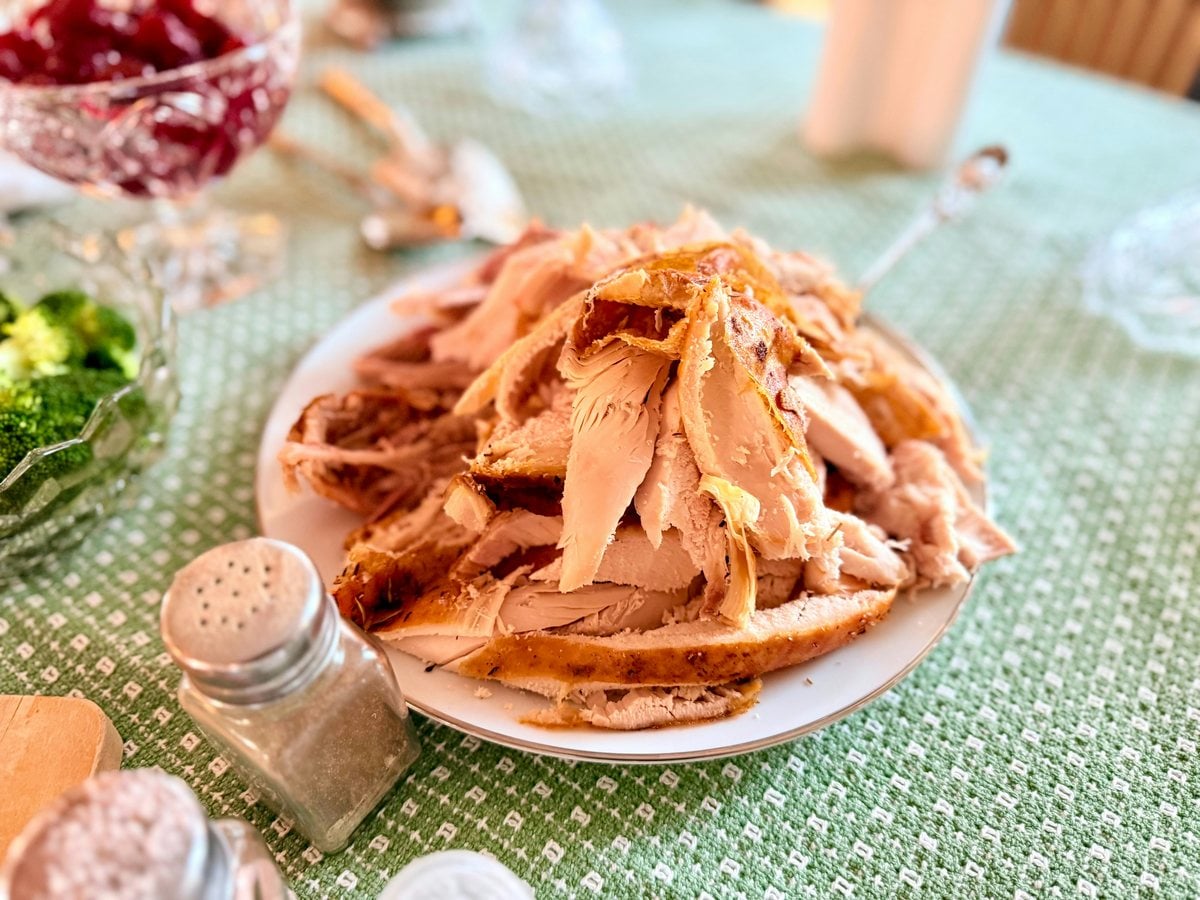
First, don’t try to reheat the whole bird. USDA recommends cutting the meat into smaller pieces: slice the breast, and the legs and wings can stay whole (USDA FSIS). Moisture matters too. A splash of liquid plus a lid or foil keeps turkey tender (Taste of Home).
- Oven (best for a crowd): Lay the slices in a baking dish, add a few spoonfuls of broth or gravy, cover tightly with foil and heat at 350°F for about 30 minutes (Taste of Home). Never set the oven below 325°F for meat and poultry (FoodSafety.gov). Check that the thickest piece reads 165°F.
- Microwave (best for one plate): Spread the turkey in an even layer in a covered microwave-safe dish, add a little liquid, vent the lid, and rotate partway through (USDA FSIS). Low or medium power heats it more gently (Taste of Home).
- Stovetop: Warm sliced turkey in a covered skillet with a little broth or gravy until it hits 165°F. The stovetop is one of the three reheating methods USDA lists for leftovers (USDA FSIS).
Making sandwiches? Leftover turkey can be eaten cold as long as it has been refrigerated properly and is still within the 3 to 4 day window (USDA FSIS). And if your family is tired of turkey dinner round two, turn it into this Instant Pot turkey noodle soup or a Thanksgiving leftovers frittata for breakfast.
How to reheat stuffing so it stays crispy
If your stuffing was cooked inside the turkey, it should have come out of the bird before the leftovers went in the fridge (USDA FSIS). From there, pick your method (all from Taste of Home):
- Oven: Heat in a baking dish at 350°F for 30 to 40 minutes, laying foil on top if the edges get too dark.
- Skillet: Heat a tablespoon of oil over medium-high, press the stuffing into a flat “pancake” and cook 3 to 5 minutes per side until golden. This is the one to try if you love the crunchy corner pieces.
- Air fryer: About 5 minutes at 320°F with a little butter on top keeps it from drying out.
- Microwave: Add a little butter or broth, cover with parchment and heat 2 to 3 minutes, stirring every minute.
Whichever you choose, check the center with your thermometer for 165°F before serving (USDA FSIS). Already planning next year’s? Here’s my easy stuffing recipe for Thanksgiving.
How to reheat mashed potatoes so they stay creamy
Mashed potatoes turn dry and gluey when they are heated too long or too hot, so low and gentle is the goal (Southern Living). Plan on about ½ cup of milk, cream or broth plus 1 to 2 tablespoons of butter for every 4 cups of potatoes, added a little at a time. Then pick your method (all from Southern Living):
- Stovetop: Low heat, a splash of liquid, and a gentle stir now and then. Stirring hard is what turns them into glue.
- Oven: Stir in the liquid and butter, spread in a baking dish, cover with foil and heat at 350°F for 20 to 30 minutes, until they reach 165°F.
- Microwave: Cover and heat at half power in 1-minute rounds, stirring and checking the temperature between each one.
Sweet potato casserole and green bean casserole
Both of these are oven dishes for a reason: the microwave softens crunchy onion toppings and melts marshmallows into a puddle (Taste of Home). Cover either dish with foil so the topping doesn’t burn, and heat green bean casserole at 350°F for 20 to 30 minutes (Taste of Home). Give either one a thermometer check in the middle for 165°F (USDA FSIS). The same foil-and-oven method works for this sweet potato casserole with pecan topping.
Gravy and cranberry sauce
Gravy usually sets into a jelly in the fridge, and that’s normal. Spoon it into a cool pan, warm it over low heat while stirring, and whisk hard if it separates (Taste of Home). Then let it come up to a rolling boil before serving, which is USDA’s rule for leftover sauces and gravies (USDA FSIS).
Cranberry sauce lasts longer than almost anything else on the table: 7 to 10 days for homemade and 1 to 2 weeks for an opened can (USDA FoodKeeper). It’s perfectly good cold, but if your family likes it warm, heat it in the microwave and stir halfway, or warm it gently on the stove (Taste of Home).
Dinner rolls and pie
Rolls: Homemade rolls keep 3 to 5 days at room temperature (USDA FoodKeeper). To warm them, bake on a sheet pan at 350°F for 7 to 10 minutes, or microwave under a damp towel for 30 to 45 seconds. Stop as soon as they are warm, because overheating makes them tough (Taste of Home).
Pie: Pumpkin and pecan pies contain eggs, so they belong in the fridge, where they keep 3 to 4 days (FoodSafety.gov). Fruit pies made with sugar can sit covered on the counter for up to 2 days, then go in the fridge for 2 more days, or go straight into the fridge for up to 7 days (University of Maine Cooperative Extension). To warm an apple pie without a soggy crust, use a low oven rather than the microwave (Taste of Home). Pumpkin pie is great cold, especially this pumpkin pie with a graham cracker crust.
Troubleshooting: dry turkey, gluey potatoes and soggy stuffing
- The turkey came out dry. Put it back in a covered dish with warm gravy or broth spooned over it. Liquid and a cover are what keep turkey moist (Taste of Home). Next time, keep the foil on the whole time.
- The mashed potatoes are gluey or stiff. Turn the heat down, add more milk or broth a spoonful at a time and fold gently instead of beating (Southern Living).
- The stuffing is soggy. The microwave steams it soft. Crisp it in a hot skillet or in the oven instead (Taste of Home).
- The gravy separated. Keep whisking as it simmers; that helps it come back together (Taste of Home).
- The edges are hot but the middle is cold. That’s a microwave cold spot. Stir, rotate, let it rest a minute and check the temperature in a few places (USDA FSIS).
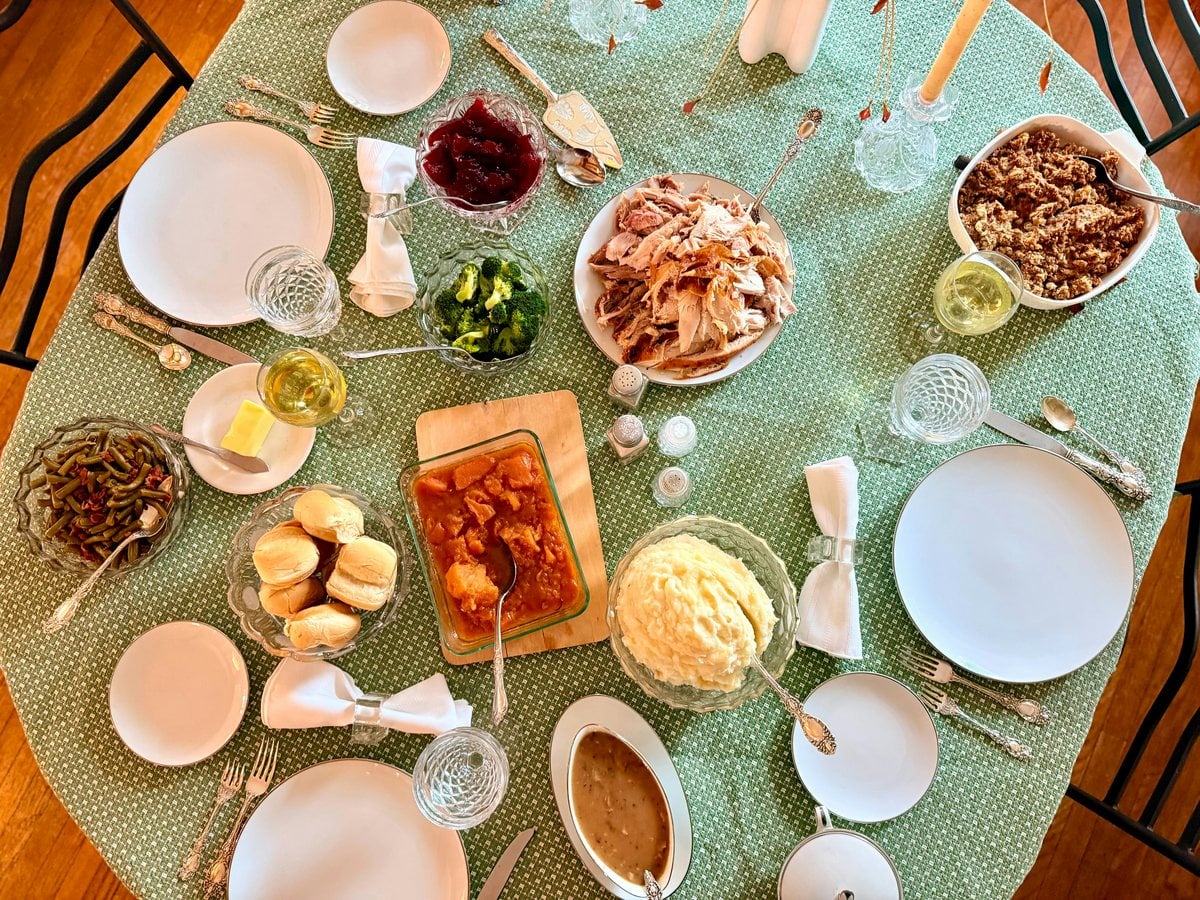
When to throw Thanksgiving leftovers out
- It’s past day 4. For a Thursday dinner, that means Monday is the last day for turkey and most sides (USDA FSIS).
- It sat out too long. More than 2 hours at room temperature, or 1 hour above 90°F (USDA FSIS).
- It looks or smells off, or has mold. Throw it out (FDA).
- The power went out. Refrigerated leftovers that sat above 40°F for 4 hours or more should go (FDA).
Please don’t use the sniff test as your only check. Food can make you very sick even when it doesn’t look, smell or taste spoiled (FDA), and you should never taste food to decide if it’s safe. When in doubt, throw it out (FoodSafety.gov).
Running out of days before you run out of turkey? Freeze it. Frozen food stays safe indefinitely at 0°F, and plain turkey slices keep their best quality for about 4 months (USDA FSIS). It’s safe to reheat frozen leftovers without thawing them first; it just takes longer (USDA FSIS).
Still unsure about something? The USDA Meat and Poultry Hotline (1-888-674-6854) answers food safety questions on weekdays from 10 a.m. to 6 p.m. ET (USDA FSIS). And if you’re saving this for next November, my roasted Thanksgiving turkey recipe is a good place to start the whole cycle again.
Save this for later

Hi, my name is Melissa! I live in Spanish Fork, Utah. I’m happily married to Rob, and together we have five wonderful kids. Our family loves to embark on adventures, often in our RV, exploring the great outdoors. I’m an avid reader and a big fan of Hallmark movies – they always have a way of lifting my spirits. Hiking is another passion of mine; there’s nothing like the tranquility of nature. I have a sweet tooth for chocolate and a love for Mexican food, both of which make life a little more delicious. In my downtime, I enjoy playing games with my family, creating memories and sharing laughter. Life is an adventure, and I’m here to enjoy every moment of it! I’m the blogger and creative mind behind the blog A Sparkle of Genius! Check out our posts on recipes, crafts, kid stuff, printables, travel and more!
