
If you’ve been on social media lately, you’ve probably noticed people replacing their cooking oils with beef tallow.
It’s showing up in home kitchens, restaurant recipes, and countless cooking videos. People are using it for crispy potatoes, perfectly seared steaks, roasted vegetables, and even homemade pie crusts.
Naturally, I started wondering:
Why is everyone cooking with beef tallow?
At first, I assumed it was just another food trend. But after researching it, I realized there are some legitimate reasons people are rediscovering this traditional cooking fat. Whether it’s better than other cooking oils depends on your health goals and personal preferences, but it’s easy to see why beef tallow has become so popular again.
Here’s what you should know before you decide whether to cook with it.
Quick Answer
Cooking with beef tallow has become popular because it has a high smoke point, adds rich flavor, works well for high-heat cooking, and is less processed than many refined vegetable oils. Home cooks also appreciate its long shelf life, versatility, and ability to create crispy, golden-brown foods. While beef tallow can absolutely be part of a balanced diet, whether it’s the healthiest choice depends on your overall eating pattern and personal health needs.
Key Takeaways
- Beef tallow is rendered beef fat used for cooking.
- It has a naturally high smoke point, making it ideal for frying, roasting, and searing.
- Many people use beef tallow instead of vegetable oils because of its cooking performance and rich flavor.
- Beef tallow can fit into a balanced diet, but no single cooking fat is healthiest for everyone.
- It’s commonly used for potatoes, steak, burgers, vegetables, eggs, and cast-iron cooking.
Beef Tallow at a Glance
- Traditional cooking fat made from rendered beef fat
- Naturally solid at room temperature
- High smoke point for frying, roasting, and searing
- Rich, savory flavor
- Long shelf life when stored properly
- Popular for cast iron cooking
- Commonly used for french fries, potatoes, vegetables, and steak
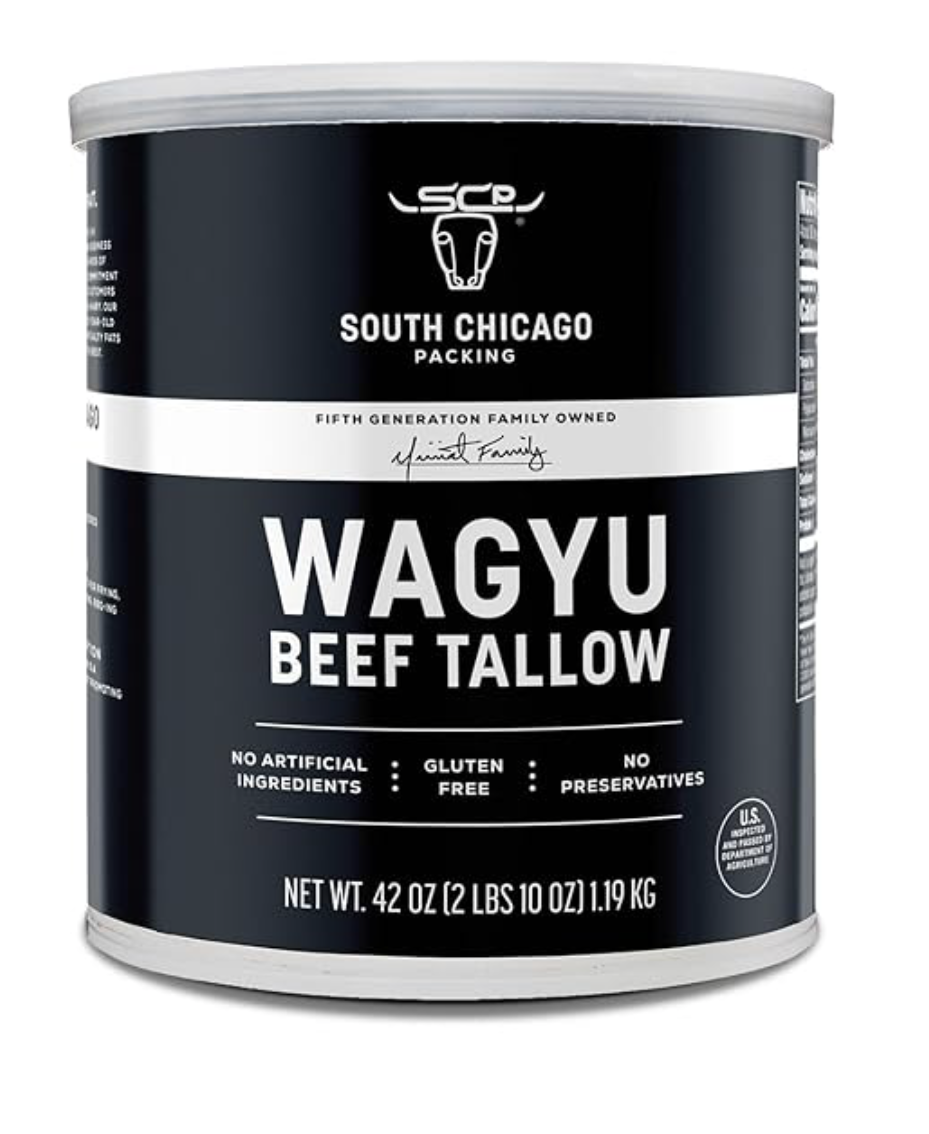
My Favorite Beef Tallow
If you’re ready to try cooking with beef tallow, this is the grass-fed brand I recommend. It’s ready to use, made with simple ingredients, and works beautifully for roasting vegetables, frying potatoes, and searing steak.
Shop My Favorite Beef Tallow →Beef Tallow vs. Other Cooking Fats
| Cooking Fat | Smoke Point | Best For |
|---|---|---|
| Beef tallow | High | Frying, roasting, searing, cast iron cooking |
| Butter | Medium | Baking, lower-heat cooking |
| Extra virgin olive oil | Medium | Sautéing, roasting, salad dressings |
| Avocado oil | Very high | High-heat cooking and grilling |
| Coconut oil | Medium-high | Baking and sautéing |
One reason people enjoy cooking with beef tallow is because it performs well during high-heat cooking while adding a rich flavor that many vegetable oils don’t provide.
Why Is Everyone Cooking With Beef Tallow?
The short answer?
People are rediscovering an old-fashioned cooking fat that works really well.
Long before grocery store shelves were lined with dozens of vegetable oils, beef tallow was one of the most common fats used for cooking in the United States. It slowly fell out of favor as processed vegetable oils became more popular.
Now the trend is shifting again.
Many home cooks are looking for traditional ingredients with simple ingredient lists. Others want cooking fats that perform well at high temperatures. Social media has also introduced a younger generation to recipes made with beef tallow, sparking curiosity about why previous generations used it so often.
Unlike many viral food trends, beef tallow isn’t new at all. It’s simply making a comeback.
What Is Beef Tallow?
Beef tallow is rendered beef fat.
The rendering process slowly heats beef fat until it melts, allowing impurities to separate from the pure fat. Once strained, the finished product becomes a clean cooking fat that’s solid at room temperature and melts quickly when heated.
Because it’s primarily made from beef fat, tallow has a naturally high smoke point and remains stable during high-heat cooking.
People commonly use beef tallow for:
- Frying
- Roasting vegetables
- Searing steaks
- Cooking eggs
- Making crispy potatoes
- Seasoning cast iron cookware
- Baking certain pastries and pie crusts
Good-quality beef tallow typically has a mild savory flavor rather than an overpowering beef taste.
How Is Beef Tallow Made?
One reason beef tallow has been used for generations is that it’s surprisingly simple to make. The rendering processslowly heats fat trimmings until the pure liquid fat separates from the remaining connective tissue and small pieces of meat.
Traditionally, cooks made beef tallow in small batches over low heat to avoid burning the fat. After the melted beef tallow finished cooking, it was poured through a fine mesh strainer to remove any remaining solids. As it cooled, the liquid became a smooth solid fat that was ready for cooking.
Some people still enjoy making their own tallow using these traditional methods, while others prefer buying a ready-to-use version. Either way, beef tallow is simply a rendered fat with a long history in home kitchens.
Best Ways to Use Beef Tallow
If you’re new to cooking with beef tallow, you don’t need to overhaul every recipe. Start by replacing your usual cooking oil in dishes that benefit from higher heat and a richer flavor.
Some of my favorite ways to use tallow include:
- Toss carrots, potatoes, or Brussels sprouts with a spoonful of tallow before roasting them on a baking sheet.
- Heat a small amount in a hot pan before cooking burgers or eggs.
- Use it in a cast-iron skillet to create a perfect sear on steaks or pork chops.
- Add it to roasted root vegetables for a beautifully golden brown, crispy texture.
- Use it for homemade flavorful fries or chicken wings.
- Stir a little into a slow cooker recipe for extra richness.
These are some of the best things to make with beef tallow because its high smoke point allows it to perform well during high-heat cooking.
Why Home Cooks Love Cooking With Beef Tallow
After researching why so many people are making the switch, I noticed the same reasons coming up over and over again. You want to get the good stuff.
It has a high smoke point.
One of the biggest advantages of cooking with beef tallow is its ability to handle high temperatures. That means it can tolerate higher temperatures before it begins to smoke, making it especially useful for frying, roasting, and searing. Unlike some oils that begin breaking down more quickly, beef tallow performs well for frying, roasting, and searing. That’s one reason many restaurants historically used it for french fries.
It creates incredibly crispy food.
If you’ve ever wondered why restaurant-style fries or roasted potatoes sometimes have a better texture than homemade versions, beef tallow can be part of the answer.
Because it tolerates high heat so well, it helps create crispy exteriors while keeping the inside tender.
It adds rich flavor.
Unlike neutral vegetable oils, beef tallow adds a subtle savory flavor that complements many dishes without overpowering them.
It’s especially popular for:
- Potatoes
- Brussels sprouts
- Root vegetables
- Chicken wings
- Steak
- Burgers
It lasts a long time.
Another benefit is its impressive shelf life.
Stored in an airtight container, beef tallow lasts much longer than many people expect. It can be refrigerated for several months or frozen for even longer.
It works in more recipes than most people realize.
Many people assume beef tallow is only useful for frying.
In reality, home cooks use it for roasting vegetables, greasing baking pans, seasoning cast iron, sautéing onions, making flaky pie crusts, and even replacing butter or oil in certain recipes.
Is Beef Tallow Healthy?
This is where the conversation becomes more nuanced.
Some people on social media describe beef tallow as a superfood.
Others claim it’s unhealthy.
The truth falls somewhere in the middle.
Beef tallow contains mostly saturated fat along with monounsaturated fats and smaller amounts of polyunsaturated fats. It also naturally contains fat-soluble vitamins in small amounts.
Some people choose beef tallow because it’s less processed than many refined vegetable oils. Others simply prefer its flavor and cooking performance.
Current scientific evidence doesn’t support labeling any single cooking fat as the healthiest choice for everyone. Instead, experts generally recommend looking at your overall dietary pattern rather than focusing on one ingredient alone.
If you have heart disease, high cholesterol, or another medical condition that affects your diet, it’s always a good idea to discuss your cooking fats with your healthcare provider.
Can You Cook Everything in Beef Tallow?
Beef tallow works well in many recipes, but it isn’t necessarily the best choice for everything.
It shines when roasting vegetables, frying potatoes, cooking burgers, searing steaks, and preparing foods over high heat. Because it has a rich, savory flavor, it works best in savory recipes rather than delicate baked goods or desserts that need a neutral cooking oil.
If you’re just getting started, try replacing your usual cooking oil when making roasted potatoes or vegetables. It’s one of the easiest ways to see why so many people enjoy cooking with beef tallow.
Beef Tallow, Seed Oils, and Healthy Fats
One reason cooking with beef tallow has become such a hot topic is the growing conversation around seed oils.
Some people have replaced vegetable oils with beef tallow because they prefer using more traditional cooking fats. Others are concerned about how certain modern oils are processed.
Beef tallow contains a mix of fatty acids, including saturated fat, monounsaturated fats, and smaller amounts of polyunsaturated fats, including linoleic acid.
While you’ll often hear people claim one cooking fat is dramatically healthier than another, the research is much more nuanced. Health organizations, including the American Heart Association, continue to recommend looking at your overall dietary pattern instead of focusing on a single ingredient.
For many people, the decision comes down to cooking performance, flavor, and personal preference rather than trying to find one “perfect” fat.
Why Beef Tallow Creates Better Flavor
One reason beef tallow shines in the kitchen is the flavor.
Unlike many refined oils with a neutral taste, beef tallow adds subtle savory notes that complement roasted vegetables, potatoes, burgers, and steaks without overpowering them.
The result is food with a richer flavor, crispier exterior, and satisfying texture that many home cooks love. Whether you’re roasting vegetables or cooking Angus beef steaks, beef tallow helps create a delicious crust while keeping the inside tender.
Can You Make Your Own Beef Tallow?
Absolutely.
Many people enjoy making homemade beef tallow because it’s a great way to make use of every part of the animal.
The process starts with beef fat trimmings, which are slowly heated until the fat melts. After straining through a fine mesh strainer, the finished tallow cools into a creamy cooking fat that’s ready to use.
If you decide to make your own, work with small batches and allow the fat to render slowly for the best flavor and texture.
Pros and Cons of Cooking With Beef Tallow
Like any cooking fat, beef tallow has advantages and disadvantages. Understanding both sides can help you decide if it’s a good fit for your kitchen.
Pros
- Excellent for high-heat cooking
- Naturally high smoke point
- Adds rich, savory flavor
- Creates crispy fries and roasted vegetables
- Long shelf life
- Great for cast iron cooking
- Less processed than many refined vegetable oils
- Versatile enough for frying, roasting, sautéing, and baking
Cons
- High in saturated fat
- Not suitable for vegetarians or vegans
- Can be more expensive than common cooking oils
- May not fit every dietary preference
- Adds a richer flavor than neutral oils, which isn’t ideal for every recipe
For many people, the decision comes down to how they cook. If you regularly roast vegetables, sear steaks, or fry potatoes, beef tallow performs exceptionally well.
Beef Tallow vs. Vegetable Oil
One reason cooking with beef tallow has become so popular is that many people are looking for alternatives to refined vegetable oils.
Vegetable oils, such as soybean, corn, and canola oil, are liquid at room temperature and are commonly used for frying and baking. Beef tallow, on the other hand, is a natural animal fat that becomes solid at room temperature.
Many home cooks prefer beef tallow because of its:
- High smoke point
- Rich flavor
- Excellent performance during high-heat cooking
- Traditional preparation methods
Others prefer vegetable oils because they have a more neutral taste or better fit their dietary preferences.
Rather than asking which one is “best,” it’s more helpful to think about which cooking fat works best for the recipe you’re making.
Beef Tallow vs. Olive Oil
Both beef tallow and extra virgin olive oil have their place in the kitchen.
Olive oil shines in salad dressings, dipping bread, and lower- to medium-heat cooking.
Beef tallow excels when cooking at higher temperatures, such as:
- Roasting potatoes
- Searing steak
- Frying chicken
- Cooking burgers
- Roasting root vegetables
Many people actually keep both in their pantry because they serve different purposes.
Best Foods to Cook With Beef Tallow
One of the biggest surprises for me was discovering just how many foods people cook with beef tallow.
Some of the most popular options include:
- Crispy french fries
- Roasted potatoes
- Brussels sprouts
- Carrots
- Sweet potatoes
- Steak
- Burgers
- Chicken wings
- Fried eggs
- Hash browns
- Grilled vegetables
- Homemade tortillas
- Pie crusts
If you’re trying beef tallow for the first time, roasted potatoes are probably the easiest place to start. The outside becomes beautifully crisp while the inside stays soft and fluffy.
Common Myths About Beef Tallow
Because beef tallow has become so popular on social media, there’s also plenty of misinformation.
Myth: Beef tallow is a miracle food.
Reality: Beef tallow is simply a cooking fat. While it has benefits, it isn’t a cure-all or a superfood.
Myth: Beef tallow is automatically healthier than every vegetable oil.
Reality: Nutrition is rarely that simple. Different cooking fats have different fatty acid profiles, and the healthiest choice depends on your overall diet, health history, and cooking habits.
Myth: Beef tallow tastes like eating a steak.
Reality: High-quality beef tallow has a mild, savory flavor. It enhances food without making everything taste like beef.
Myth: Beef tallow is only for frying.
Reality: People use beef tallow for roasting vegetables, sautéing onions, seasoning cast iron, baking, and much more.
How to Store Beef Tallow
One reason home cooks love beef tallow is its impressive shelf life.
Store it in an airtight container away from moisture.
The best ways you can keep it:
- At room temperature for shorter periods in a cool kitchen
- In the refrigerator for several months
- In the freezer for long-term storage
Always use a clean spoon when scooping it to help extend its freshness.
Where Can You Buy Beef Tallow?
Finding beef tallow is much easier than it used to be.
You can often find it at:
- Grocery stores
- Local butcher shops
- Farmers markets
- Health food stores
- Online retailers
If you don’t want to make your own from beef fat trimmings, buying a ready-made jar is the easiest option.
My Favorite Beef Tallow
If you’re curious about cooking with beef tallow but don’t want to render your own, buying a high-quality prepared version is the easiest way to get started.
I recommend choosing a grass-fed beef tallow with minimal ingredients. A good-quality tallow is ready to use right out of the jar and works beautifully for roasting vegetables, cooking potatoes, searing steak, and everyday high-heat cooking. You can also get your own beef tallow at grocery stores.
Ready to Try Beef Tallow?
Skip the hassle of rendering your own. This is the grass-fed beef tallow I recommend for roasting, frying, and everyday cooking.
Shop on Amazon →Who Should Try Cooking With Beef Tallow?
Cooking with beef tallow may be a good option for:
- Home cooks who roast vegetables often
- People who cook with cast iron
- Anyone looking for a high-heat cooking fat
- Those who enjoy traditional cooking methods
It may not be the best fit for:
- Vegetarians
- Vegans
- People following specific medical diets unless recommended by their healthcare provider
Can You Use Beef Tallow for More Than Cooking?
Although cooking with beef tallow is its most common use today, it has also been used for generations in homemade soaps and natural skincare products.
Some people appreciate beef tallow because it contains naturally occurring lipids that make it useful in traditional skin care recipes.
Personally, I primarily use it in the kitchen, but it’s interesting to see how versatile this old-fashioned ingredient has been over the years.
Frequently Asked Questions
Is beef tallow healthy?
Beef tallow can absolutely fit into a balanced diet. It contains saturated fat, monounsaturated fats, and small amounts of polyunsaturated fats. Whether it’s the right choice for you depends on your overall eating pattern and personal health needs.
Why is everyone cooking with beef tallow?
Many people enjoy cooking with beef tallow because it has a high smoke point, adds rich flavor, creates crispy foods, and is less processed than many refined vegetable oils.
Does beef tallow taste like beef?
Not strongly. Most high-quality beef tallow has a mild savory flavor that enhances food without overpowering it.
Is beef tallow better than butter?
It depends on what you’re cooking. Beef tallow performs better during high-heat cooking, while butter is often preferred for baking and lower-temperature recipes.
Can you fry with beef tallow?
Yes. Beef tallow has a naturally high smoke point, making it an excellent choice for frying and deep frying.
Can you cook eggs in beef tallow?
Absolutely. Many people enjoy the flavor it adds while helping prevent sticking.
Does beef tallow need to be refrigerated?
Refrigeration helps extend its shelf life, although some people store it at room temperature for shorter periods in cool environments.
Is beef tallow good for cast iron?
Yes. Many cast iron enthusiasts use beef tallow for cooking and occasionally for seasoning because it performs well at high temperatures.
Is beef tallow keto?
Yes. Beef tallow is naturally low in carbohydrates and is commonly used in keto, low-carb, and carnivore diets as a cooking fat. Keep in mind that whether it’s a good fit depends on your individual nutrition goals and overall eating pattern.
Can you reuse beef tallow after frying?
Yes. If the tallow is strained to remove food particles and stored properly, it can often be reused several times for frying. Allow it to cool, strain it through a fine mesh strainer or cheesecloth, and store it in the refrigerator until you’re ready to use it again.
Does beef tallow go bad?
Yes, although it has a much longer shelf life than many cooking oils. Stored in an airtight container, beef tallow can last several months in the refrigerator and even longer in the freezer. If it develops an unpleasant smell, mold, or an off taste, it’s time to throw it away.
Can you bake with beef tallow?
Yes. Beef tallow can replace butter, shortening, or oil in some baked goods. It’s especially popular for savory pastries, biscuits, pie crusts, and homemade breads. Because it has a mild savory flavor, it isn’t always the best choice for delicate desserts.
Is grass-fed beef tallow better?
Grass-fed beef tallow is often preferred because many people appreciate the way the cattle are raised and the quality of the finished product. While the nutritional differences between grass-fed and conventionally raised beef tallow are generally modest, many home cooks choose grass-fed tallow for its flavor and sourcing.
Can you use beef tallow in an air fryer?
Yes. A small amount of melted beef tallow can be tossed with vegetables, potatoes, or other foods before placing them in the air fryer. It helps promote browning and creates a crispy texture without using much fat.
Is beef tallow better than butter for cooking?
It depends on what you’re making. Beef tallow has a higher smoke point than butter, making it better for frying, roasting, and searing. Butter is often preferred for baking, sauces, and recipes where its rich dairy flavor is part of the finished dish.
Why did McDonald’s stop using beef tallow?
McDonald’s originally cooked its famous french fries in beef tallow, which contributed to their signature flavor. In the early 1990s, the company switched to vegetable oil in response to changing nutrition recommendations and consumer preferences. Today, that history is one reason many people are curious about cooking with beef tallow at home.
Final Thoughts
When I first heard people talking about cooking with beef tallow, I assumed it was just another social media trend.
After learning more, I understand why it’s becoming popular again.
Beef tallow isn’t new—it has been used for generations. What is new is that more people are rediscovering how well it works for roasting vegetables, searing meat, frying potatoes, and other high-heat cooking.
Is it the perfect cooking fat?
No. There probably isn’t one cooking fat that’s perfect for everyone.
But if you’re looking for a traditional option with a high smoke point, rich flavor, and incredible versatility, beef tallow is certainly worth trying.
Whether you use it occasionally or make it a regular part of your cooking routine, it’s easy to see why so many home cooks are bringing this old-fashioned ingredient back into modern kitchens. This article was written after reviewing current nutrition guidance and scientific literature on dietary fats, cooking oils, and beef tallow.
You might also like Why Is Everyone Taking Creatine? The answer surprised me! and Primal Queen Coupon Code – 25% Off First Purchase.

Hi, my name is Melissa! I live in Spanish Fork, Utah. I’m happily married to Rob, and together we have five wonderful kids. Our family loves to embark on adventures, often in our RV, exploring the great outdoors. I’m an avid reader and a big fan of Hallmark movies – they always have a way of lifting my spirits. Hiking is another passion of mine; there’s nothing like the tranquility of nature. I have a sweet tooth for chocolate and a love for Mexican food, both of which make life a little more delicious. In my downtime, I enjoy playing games with my family, creating memories and sharing laughter. Life is an adventure, and I’m here to enjoy every moment of it! I’m the blogger and creative mind behind the blog A Sparkle of Genius! Check out our posts on recipes, crafts, kid stuff, printables, travel and more!
